Strings, workshops and an Austrian UNESCO listing
How the Salzburg marionettes work
The Salzburg cross, the workshops where the figures are made and the 2016 Austrian UNESCO recognition of the technique, explained from primary sources.
Book the Marionette Theatre ↗Quick answer
The Salzburg marionettes hang from strings held by puppeteers who stand above the stage. They are controlled with the Salzburg cross, developed by the founder Anton Aicher in 1913, and the figures are carved and costumed in the theatre's own workshops. In 2016 the Austrian UNESCO Commission recognised the technique as intangible cultural heritage.
A marionette is a string puppet
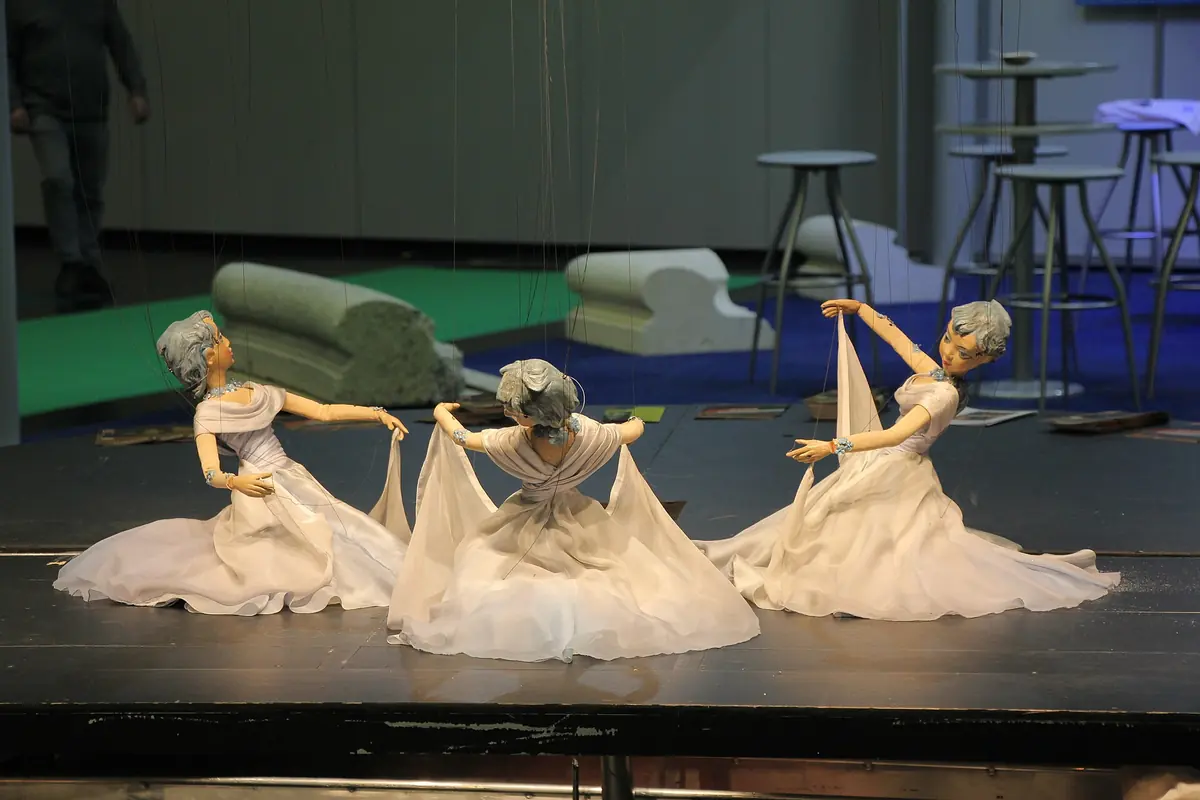
A marionette is a puppet controlled from above with strings or wires. The word comes from the French for little Mary, a reminder that medieval string puppets often acted out biblical stories. This sets marionettes apart from hand, rod and shadow puppets. They have a long history in Europe, and operas were composed for them in the eighteenth century. The Salzburg theatre, founded in 1913 by Anton Aicher, still performs full-length operas this way.
The Salzburg cross
The company's technique rests mainly on the Salzburg cross, a control Anton Aicher developed in 1913. It is a T-shaped operating cross with a triangle and a stick for the hands, and a refined form is still used today. The puppeteer, hidden above the stage, guides each figure through the cross. The theatre's history page describes the result as illusionist puppetry, in which the puppeteer stays out of sight and the figures move lifelike.
What the 2016 recognition means
In 2016 the Austrian UNESCO Commission recognised the theatre's operating technique, called its Spielpraxis, and listed it as intangible cultural heritage on Austria's national register. The commission described it as the most highly developed form of puppet and figure theatre. The national inventory is Austria's own register under the UNESCO convention, separate from the international lists. The recognition honours both the skill of manipulating the figures and the importance of passing that skill on.
Making a figure
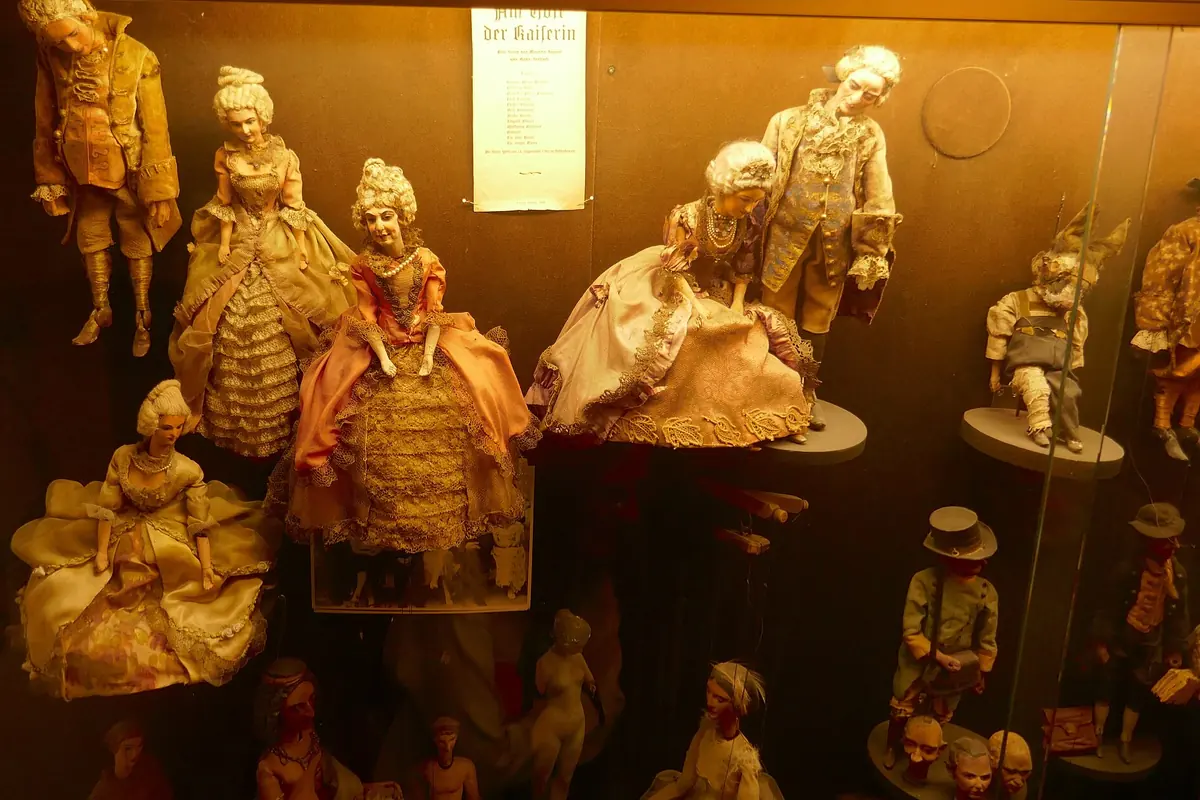
Each figure is carved, assembled and clothed in the theatre's own workshops. The head is the most expressive feature, and one head can take anywhere from three days to months to make. The heads have come from different sculptors, from Salzburg and elsewhere, and the theatre's resident puppets are each hand-crafted and unique. Costumes are made separately, and members of the ensemble work in the workshop as well as on the stage.
Learning the craft
Mastering the puppets takes years. The theatre's artistic director says it takes six to eight years before a puppeteer has really mastered manipulation, and that every puppeteer also works in the workshop. The figures are not all the same size: the first marionettes were only 20 to 30 centimetres tall, and larger figures of almost a metre were built for tours to big open-air stages in the 1930s. That range shows how the company has adapted its craft to different stages over time.
Costumes and the early years
Costumes have been part of the craft from the start. The founder's wife, Rosa, made the early costumes, while the founder carved the first heads and bodies himself and taught sculpture at a vocational college in Salzburg. The repertoire began with Kasperl plays and moved toward music theatre under his son Hermann, who modernised the stage and its lighting. The figures, the costumes and the staging developed together, which is why a modern production still feels like one piece of craft.
What this means for your evening
Knowing the technique changes how you watch. Notice how a figure's weight settles when it stops, how the head turns before the hand moves, and how the strings nearly disappear in stage light. The best moments come when a tiny movement reads as emotion. The Magic Flute and The Sound of Music both rely on the same technique, applied to figures made for very different stories, one in German and one in English.
From a studio to Schwarzstraße
The theatre began in 1913 in the studio of its founder, a sculptor, with a first public performance of Mozart's Bastien and Bastienne. It later moved through several homes before opening in its present building at Schwarzstraße 24 in 1971. Tours took the company to many countries and its Magic Flute became its most performed production. Today it stages operas, plays and fairy tales, and the seasonal repertoire changes through the year.
Read next: Salzburg Marionette Theatre tickets
Frequently asked questions
How are the marionettes controlled?
From above, with strings attached to the Salzburg cross, a control developed by Anton Aicher in 1913. Puppeteers work from a position above the stage.
Is the theatre on UNESCO's list?
Its operating technique was recognised in 2016 by the Austrian UNESCO Commission and listed on Austria's national inventory of intangible cultural heritage.
Who makes the puppets?
The theatre's own workshops. Figures are carved, assembled and costumed in-house, and the ensemble's puppeteers also work in the workshop.
Sources
- UNESCO Intangible Cultural Heritage (Salzburger Marionettentheater)
- History (Salzburger Marionettentheater)
- Sculptors and puppets (Salzburger Marionettentheater)
- Grand opera on a small scale (salzburg.info)
- Salzburg's little stars of the stage (salzburg.info)
- Intangible cultural heritage in Austria (UNESCO Austria)
- Marionette (Wikipedia)